Michael Brown
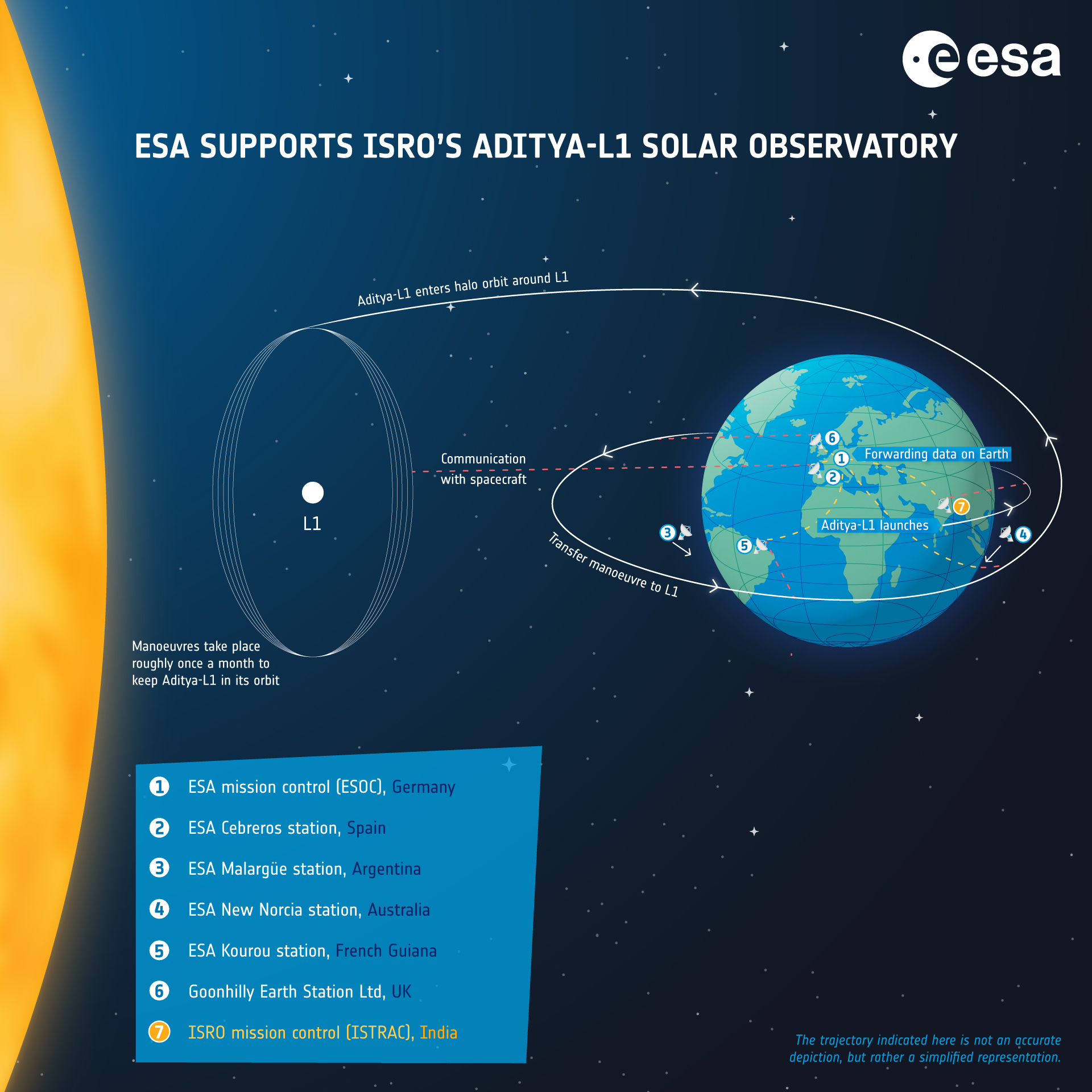
The Aditya-L1 mission aims to study solar eruptions, providing valuable insights into solar activities and their effects on our planet.
What is the Aditya-L1 mission?
The Aditya-L1 mission is India’s first dedicated solar observatory, aimed at studying the Sun and its influence on the Earth. Launched by the Indian Space Research Organisation (ISRO), this mission is designed to enhance our understanding of solar activities, particularly focusing on solar eruptions and their impact on the Earth’s atmosphere.
The spacecraft will be positioned at the Lagrange point 1 (L1) between the Earth and the Sun, allowing it to maintain a continuous view of solar phenomena without any interruptions caused by the Earth’s shadow.
Key objectives of the Aditya-L1 mission include:
- Studying the solar corona and its heating mechanisms
- Understanding the dynamics of solar winds
- Monitoring solar flares and their effects on space weather
This groundbreaking mission promises to provide valuable insights into the Sun’s behavior and its impact on our planet.
Understanding solar eruptions
Solar eruptions, also known as solar flares or coronal mass ejections, are powerful bursts of radiation from the sun’s surface. These phenomena can have significant effects on space weather and can even impact technology on Earth. Understanding solar eruptions is crucial for predicting their potential impact on satellites, communication systems, and power grids.
The Aditya-L1 mission aims to study these solar phenomena in detail. By observing the sun from a stable point in space, it will provide valuable insights into the mechanisms driving solar eruptions. This mission will focus on several key aspects:
- Identifying triggers: Determining what causes solar flares to occur.
- Measuring intensity: Analyzing the energy levels of these eruptions.
- Monitoring effects: Assessing how solar eruptions influence Earth’s magnetic field.
Through this research, scientists hope to enhance their understanding of solar activities and improve predictive models, ultimately safeguarding technological infrastructure on our planet.
Aditya-L1 mission objectives
The Aditya-L1 mission aims to deepen our understanding of solar dynamics and their impact on the Earth. The primary objectives of this mission include:
- Observation of the Solar Corona: Studying the outer layer of the sun to uncover the mechanisms behind solar eruptions.
- Monitoring Solar Winds: Analyzing the flow of charged particles from the sun to predict their effects on space weather.
- Studying Magnetic Fields: Examining the magnetic fields that influence solar activities and contribute to cosmic events.
- Investigating Solar Flares: Understanding the causes and effects of sudden bursts of energy from the sun, which can impact satellite operations and communication on Earth.
- Enhancing Space Weather Forecasting: Providing data that can improve predictions related to solar activities and their potential hazards.
Through these objectives, the Aditya-L1 mission seeks to advance our knowledge of the sun and its interactions with the solar system.
Impact of solar activity on Earth
The impact of solar activity on Earth is profound and multifaceted. Solar eruptions, including coronal mass ejections (CMEs) and solar flares, can disrupt technology, communication systems, and even power grids. These eruptions release vast amounts of energy and charged particles into space, which can collide with Earth’s magnetic field.
As the Aditya-L1 mission aims to study solar phenomena, understanding these impacts is crucial. Some of the effects of solar activity include:
- Disruption of satellite communications: High-energy particles can interfere with satellite operations.
- Power outages: Intense solar storms can induce currents that damage electrical infrastructure.
- Radiation exposure: Increased radiation levels pose risks to astronauts and high-altitude flights.
- Auroras: Beautiful displays of light in the polar regions occur due to interactions between solar particles and the atmosphere.
By studying solar activity through the Aditya-L1 mission, scientists hope to improve predictive models and mitigate these risks.
ISRO’s role in space exploration
The Indian Space Research Organisation (ISRO) has been at the forefront of space exploration, and the Aditya-L1 mission is a testament to its commitment to understanding the Sun. This mission, India’s first dedicated solar observatory, aims to study solar activities and their impact on the Earth’s atmosphere.
ISRO’s expertise in launching complex missions has been pivotal in the development of Aditya-L1. The organization has meticulously designed the spacecraft to operate in a unique halo orbit around the Lagrange Point 1, which allows for uninterrupted observation of solar phenomena.
In addition to advancing scientific knowledge, ISRO’s role in the Aditya-L1 mission enhances international collaboration in space research. By sharing data and findings, ISRO contributes to a global understanding of solar dynamics and their potential effects on technology and climate on Earth.
Through the Aditya-L1 mission, ISRO continues to solidify its reputation as a leader in space exploration.
Future of solar research
The future of solar research looks promising with the advancements brought by the Aditya-L1 mission. As scientists gain more insights into solar phenomena, the potential for groundbreaking discoveries increases. This mission is expected to enhance our understanding of the sun’s behavior and its impacts on space weather.
Researchers anticipate that the data collected from Aditya-L1 will lead to significant developments in the following areas:
- Predicting solar storms: Improved forecasting can help mitigate the effects of solar eruptions on satellites and communication systems.
- Understanding solar dynamics: Study of the sun’s magnetic fields will provide insights into its complex processes.
- Climate connections: Exploring the relationship between solar activity and Earth’s climate may yield new perspectives on climate change.
Overall, the Aditya-L1 mission is set to pave the way for future advancements in solar science and technology.
By European Space Agency via Openverse
Read the original
Diversifying oil imports: The smart strategy for India · Superconductivity analysis: Proven methods to solve riddle · OPPO Find X10 launch: The Best Live Streaming Guide